
Lead Enrichment Tools in 2025, Comparing the Top Platforms and Metrics That Matter
Build a reliable pipeline with real-time enrichment, validated data, and actionable buyer intent signals.
 October 2nd, 2025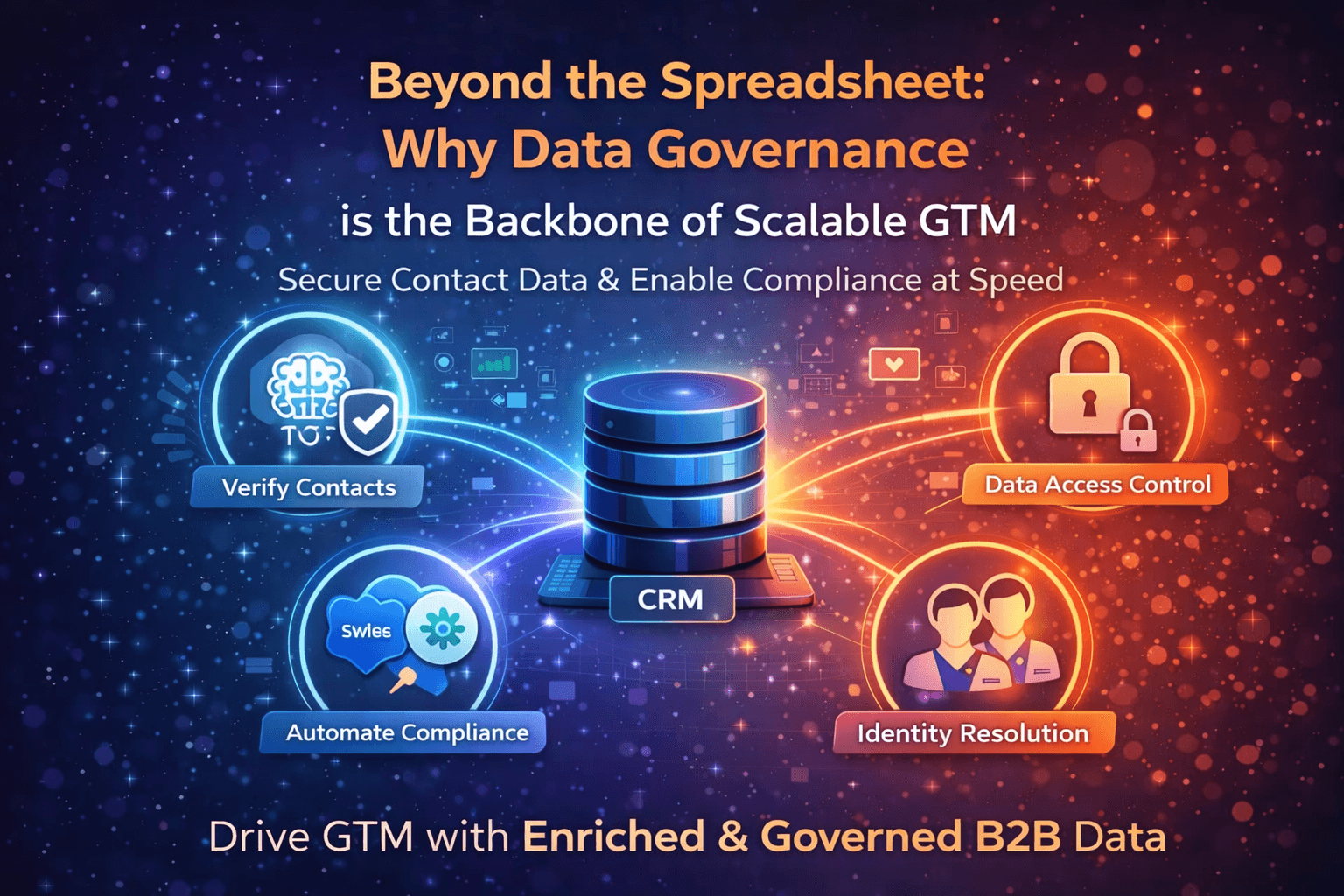
Scale your GTM safely. Learn why data governance is critical for large contact databases, from compliance rules to secure data sharing and permission control.
For a Demand Gen Head or a RevOps leader, a large contact database is a double-edged sword. On one side, it represents your Total Addressable Market (TAM) - a goldmine of potential revenue. On the other hand, it can quickly become a toxic asset. Without a rigorous data governance strategy, a database of 100,000+ records isn’t an asset; it’s a liability waiting to happen.
We’ve all seen the symptoms of "Governance Decay": SDRs calling the same prospect three times in an hour, marketing emails hitting "spam traps" because of non-compliance, and sensitive lead lists being exported to personal desktops without any permission control.
In the modern B2B landscape, where privacy regulations like GDPR and CCPA are strictly enforced and AI-driven outreach requires pristine data to function, governance is no longer a "back-office IT task." It is a strategic imperative. If you want to scale your GTM without breaking your reputation or your budget, you need to master the art of governing your data.
Historically, B2B data management was treated with a "more is better" philosophy. Companies would buy massive lists, dump them into a CRM, and give every user full export rights. This "Wild West" approach is failing in today's market for three specific reasons:
In many organizations, secure data sharing is non-existent. When an SDR wants to run a specific campaign, they often export a CSV file to their local drive. Suddenly, your most valuable proprietary data is sitting on an unencrypted laptop in a coffee shop. There is no audit trail, no version control, and zero security.
Compliance is not a static checkbox. It is a moving target. Traditional databases often lack the ability to map specific compliance rules (like "Do Not Call" lists or regional opt-in requirements) across different jurisdictions. A lead that is "legal" to email in the US might result in a massive fine in Germany. Without centralized governance, individual contributors are left to make legal interpretations they aren't qualified to make.
Who "owns" a lead? Is it the Marketing team that captured it at a webinar? Or the Sales team that prospected them six months ago? Without clear data governance, you end up with "Duplicate Hell." This doesn't just mess up your reporting; it ruins the customer experience when a prospect receives conflicting messages from two different departments.
The shift from manual data management to AI-driven intelligence transforms governance from a restrictive "No" into an enabling "Yes."
At Datakart, we believe that the best governance is invisible and automated. Modern platforms use AI to act as a digital custodian for your contact records. Instead of a human manually checking for compliance or accuracy, an AI layer performs continuous, real-time audits.
This methodology upgrade ensures that your team is always moving at full speed, but within the safety rails of a governed environment.
Building a governance framework doesn't happen overnight, but you can implement these five steps to immediately de-risk your operations.
Assign a "Data Steward" for every major segment of your database. Define exactly who has the right to create, read, update, and delete (CRUD) records.
Move away from "All or Nothing" access. Use your data intelligence platform to restrict sensitive fields (like personal mobile numbers) to only those who are actively in a sequence with that prospect.
Create a "Global Compliance Ledger." This should automatically flag records based on their geographic location and their opt-in status. According to HubSpot, companies with centralized governance see a significant reduction in legal friction and a boost in email deliverability.
Eliminate CSV exports. If you need to share data between Marketing and Sales, do it via direct API integrations between your data platform and your CRM. This keeps the data within a "walled garden" where it can be tracked and audited.
Governance includes the "Right to be Forgotten" and the "Right to Accuracy." Implement automated workflows that verify and refresh your data every 30 to 90 days. If a contact is no longer at a company, your governance rules should dictate that the record is either updated or archived to prevent "zombie leads" from cluttering your outbound efforts.
Regularly review your system logs. Who is accessing the most data? Are there unusual spikes in activity? Modern data governance requires a proactive approach to monitoring who is interacting with your TAM.
Consider a global SaaS company with over 1 million records in their Salesforce instance. Their connect rates had plummeted to below 3%, and their marketing domain was dangerously close to being blacklisted due to high bounce rates and spam complaints in Europe.
The Problem: There was zero permission control. Every SDR could buy their own lists and upload them without verification. The database was 40% duplicated and 20% non-compliant with GDPR.
The Solution: They implemented Datakart to sit as the "Governance Layer" on top of their CRM.
The Impact: Within one quarter, their connect rates improved by 20%. Why? Because the SDRs were no longer calling the same person three times or reaching out to "dead" leads. By governing their data, they didn't just stay compliant; they became more efficient.
Even the most well-intentioned GTM leaders fall into these traps:
To manage data governance at scale, you need a stack that is built for interoperability. According to Gartner, the most successful organizations treat data as a corporate asset, managed by both IT and business leaders.
Best Practice: Use "Field-Level Security." Don't just control who sees an Account; control who sees the "Direct Mobile" vs. the "Corporate Email." This level of detail is what separates a professional GTM engine from a risky one.
In the age of AI and hyper-regulation, data governance is the ultimate competitive advantage. It allows you to move faster with the confidence that you aren't damaging your brand or breaking the law. By implementing strict permission control, automating compliance rules, and ensuring secure data sharing, you transform your contact database from a messy "junk drawer" into a precision-guided revenue engine.
Stop letting bad data and risky habits hold your GTM back. Ensure your team is working with the most accurate, compliant, and secure data in the industry. Book a demo with Datakart today and let us show you how to build a world-class governance framework.
Data governance is a collection of processes, roles, policies, and standards that ensure the effective and efficient use of information in enabling an organization to achieve its goals. In B2B sales, it specifically refers to how contact and account data is acquired, stored, and used.
Compliance rules dictate how and when you can contact a prospect. Violating these can lead to heavy fines and domain blacklisting. A good governance framework automates these rules so your SDRs don't have to be legal experts to stay safe.
Permission control ensures that sensitive data (like mobile numbers or internal account notes) is only accessible to authorized users. This prevents data theft, reduces "lead poaching" internally, and ensures that you have a clear audit trail of who is interacting with your customers.
The best way to handle secure data sharing is through direct system-to-system integrations (APIs) rather than manual file transfers. This ensures the data stays within your governed ecosystem and minimizes the risk of human error or data loss.
Build a reliable pipeline with real-time enrichment, validated data, and actionable buyer intent signals.
October 2nd, 2025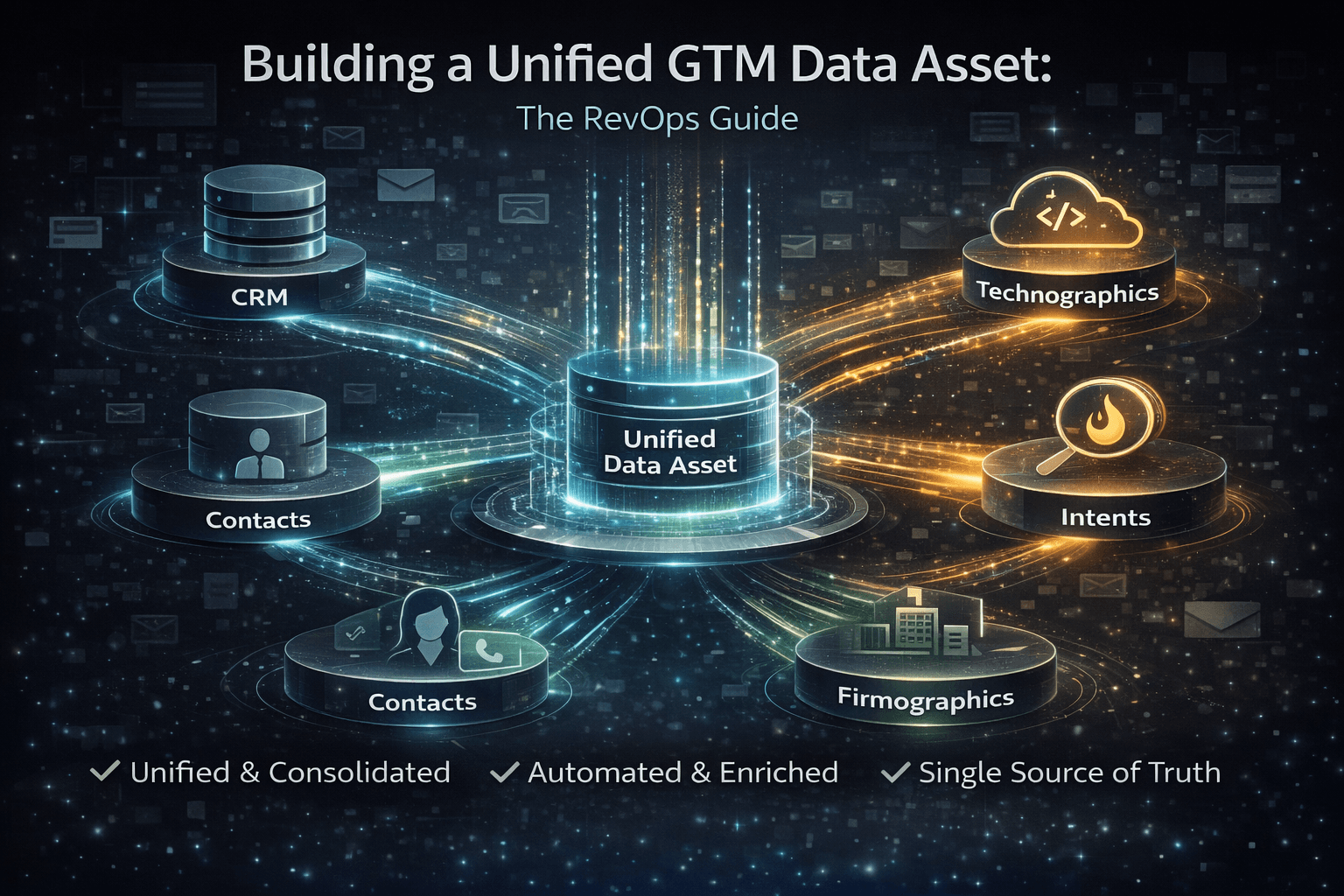
Stop struggling with data silos. Learn how to create a unified data asset by merging databases and automating your enrichment stack for better GTM.
January 20th, 2026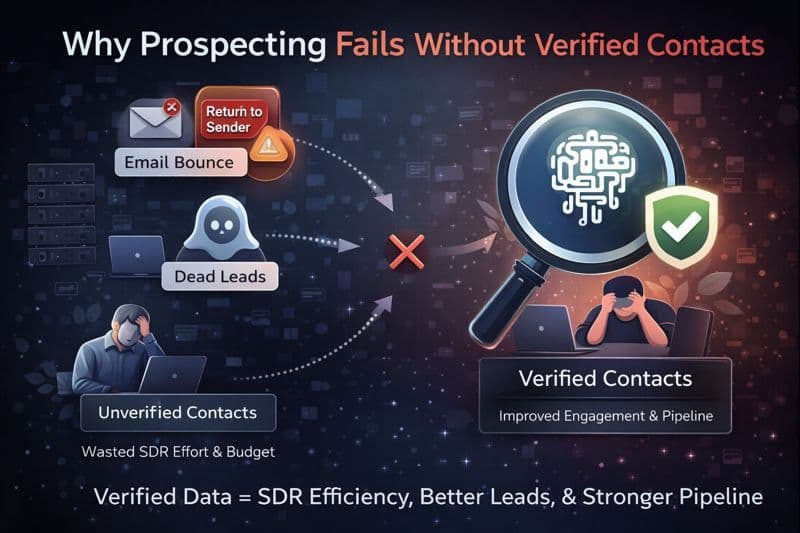
Stop wasting resources on dead leads. Discover how verified contacts improve SDR efficiency, outbound performance, and lead quality for B2B GTM teams.
January 20th, 2026