
Lead Enrichment Tools in 2025, Comparing the Top Platforms and Metrics That Matter
Build a reliable pipeline with real-time enrichment, validated data, and actionable buyer intent signals.
 October 2nd, 2025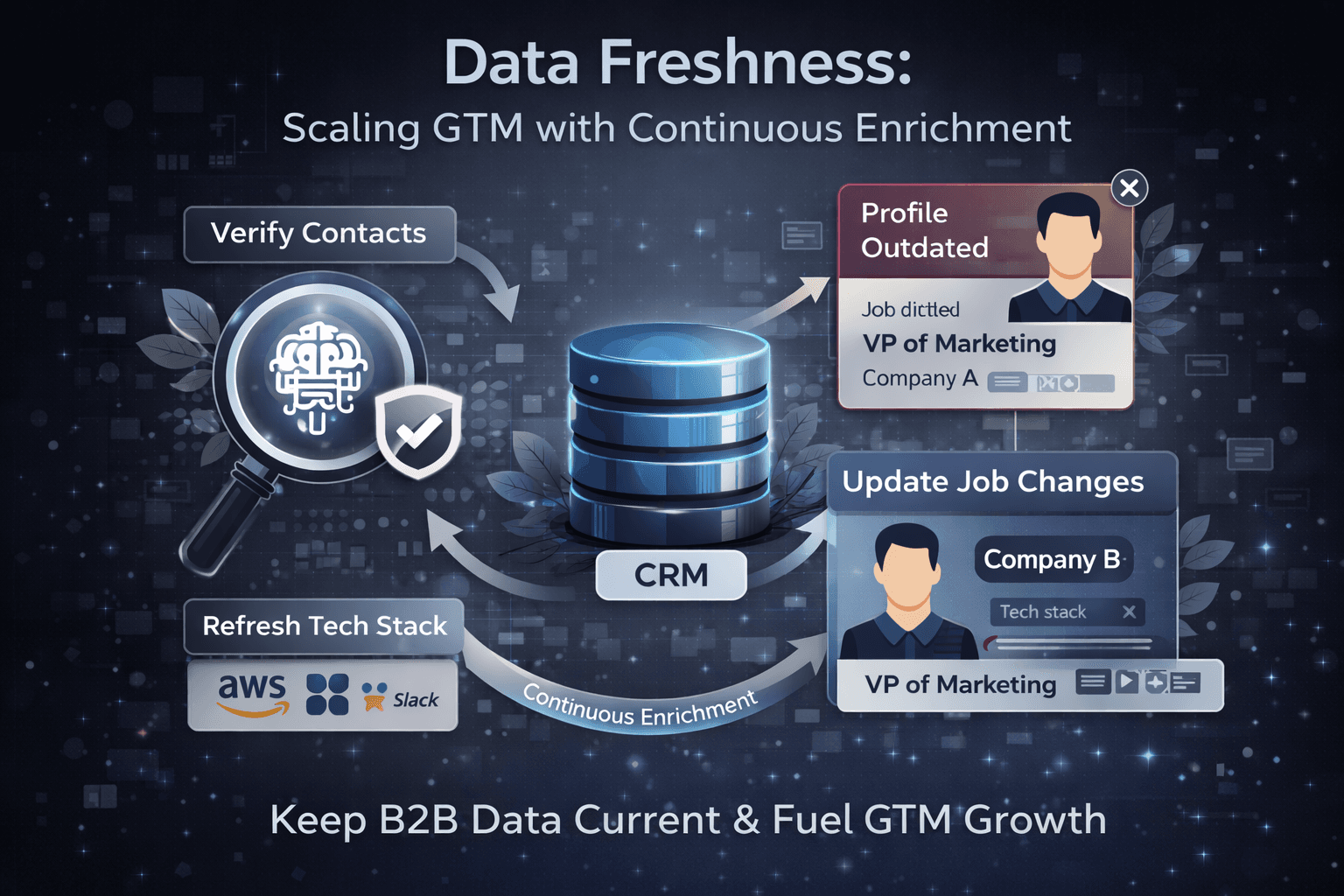
Stop wasting SDR time on stale leads. Learn how to maintain data freshness through continuous enrichment cycles and AI-powered profile refreshes.
In the high-stakes world of B2B SaaS, your Go-To-Market (GTM) strategy is only as strong as the data fueling it. You can have the most talented SDRs, the most compelling messaging, and a world-class product, but if your CRM is a graveyard of "ghost profiles" and outdated technographics, your growth will stall.
For Demand Gen and RevOps leaders, data freshness isn't just a technical metric; it’s a revenue driver. In a market where 20-30% of professional data changes every year - people change jobs, companies pivot their tech stacks, and budgets shift - relying on a "static list" is a strategy for failure.
The most successful GTM teams have moved away from one-off list purchases toward continuous enrichment cycles. This post explores why traditional data management is failing and provides a framework for keeping your data perpetually fresh.
Historically, B2B data acquisition followed a "batch and blast" cycle. A GTM team would buy a massive list of contacts matching their ICP, upload them to a CRM, and work those leads for six to twelve months.
This approach is now fundamentally broken for three reasons:
The "old way" treats data like a mineral - something you mine once and store. The "new way" treats data like a garden - something that requires constant irrigation and weeding.
The solution to data decay isn't "more data," but "better orchestration." This is where the concept of dynamic, AI-verified data transforms RevOps.
Instead of a static snapshot, modern platforms like Datakart.ai utilize AI to create an "always-on" feedback loop. This methodology goes beyond simple scraping; it uses machine learning to verify data freshness by cross-referencing multiple signals in real-time.
By shifting to this automated model, companies move from "recovering" from bad data to "operating" on a foundation of perpetual accuracy.
Maintaining data freshness requires a shift in both mindset and technology. Here is a 6-step framework to build a self-healing database.
You cannot fix what you haven't measured. Run a "health check" on your current CRM. Look for bounce rates, "No longer at company" responses, and empty technographic fields. This baseline helps you quantify the ROI of a refresh.
Not all data points decay at the same rate. A company's headquarters rarely changes, but their "Current Tech Stack" or "Department Head" changes constantly. Prioritize the fields that directly impact your personalization and routing.
Set up a recurring schedule for your entire database. For your Tier-1 accounts, a profile refresh should happen every 30 days. For Tier-2 or long-term nurture accounts, a 90-day cycle may suffice. Automation ensures that enrichment isn't a "project" that gets forgotten, but a background process.
Ensure that new leads entering your system are immediately enriched. When a person downloads a whitepaper, an automated enrichment cycle should immediately pull their company’s revenue, tech stack, and recent news into your CRM so the follow-up is perfectly timed.
CTA: Want to see your TAM in action? Try Datakart’s Free Audit to uncover the "dead zones" in your CRM today.
Your SDRs are your eyes and ears. Create a simple mechanism in your CRM (like a "Data Inaccurate" checkbox) that triggers a manual or AI-assisted verification. This ensures that when a human finds an error, the system learns and corrects it for everyone.
In B2B SaaS, a "fresh" profile includes what the company is using. If a target account drops a competitor’s software, that is a high-intent signal. Continuous enrichment should track these shifts to give your sales team the "why now" for their outreach.
Consider "CloudScale" (a hypothetical DevOps SaaS). They had a database of 50,000 leads but were seeing a steady decline in SDR performance. Their "connect rate" (actually getting a prospect on the phone) had dropped to 3%.
The Problem: Their data was 18 months old. Over 15% of their contacts had moved to new companies, and 20% of the companies on their list had changed their primary cloud provider.
The Solution: They implemented Datakart’s continuous enrichment engine. They:
The Impact: Within one quarter, CloudScale saw a 25% increase in connect rates. Because the SDRs were calling the right people on verified lines, and referencing the actual technology the company was using, their "meeting booked" rate nearly doubled. They didn't need more leads; they just needed their current leads to be fresh.
Even with the right tools, teams often falter in their data strategy. Avoid these common pitfalls:
To maintain data freshness at scale, you need a stack where the tools talk to each other. According to Gartner, the most effective RevOps teams prioritize "interoperability" in their data stack.
Best Practice: Use a "Waterfall" enrichment approach. If your primary data source lacks a specific field (like a mobile number), have your system automatically "failover" to a secondary verified source. This ensures maximum coverage without sacrificing accuracy.
In the modern B2B landscape, data freshness is your greatest competitive advantage. Stale data leads to wasted spend, frustrated SDRs, and missed quotas. By implementing continuous enrichment cycles and leveraging AI to maintain data updates, you ensure that your GTM team is always hitting the right target with the right message.
Data isn't a static asset - it's a living part of your revenue engine. Keep it fresh, or watch your growth wither.
Stop guessing and start activating your TAM with 100% confidence. Book a personalized demo with Datakart and see how continuous enrichment can transform your outbound results.
Data cleaning involves removing errors, duplicates, and "dead" data from your CRM. Data enrichment is the process of adding new, valuable context to existing records - such as current tech stacks, social profiles, and verified phone numbers - to make the data more actionable.
For high-priority "Active" accounts, we recommend a profile refresh every 30 days. For your broader TAM, a 90-day cycle is usually sufficient to maintain a healthy baseline of data freshness.
Yes. By maintaining fresh data, you ensure that you are respecting "Opt-Out" requests and not reaching out to individuals who have moved to new roles where your previous processing basis may no longer apply. It helps keep your "Right to be Forgotten" records accurate.
Technographics (the tools a company uses) change almost as often as people do. Knowing that a company just started using a competitor's product - or just stopped - allows you to time your outreach based on actual business needs rather than random timing.
Build a reliable pipeline with real-time enrichment, validated data, and actionable buyer intent signals.
October 2nd, 2025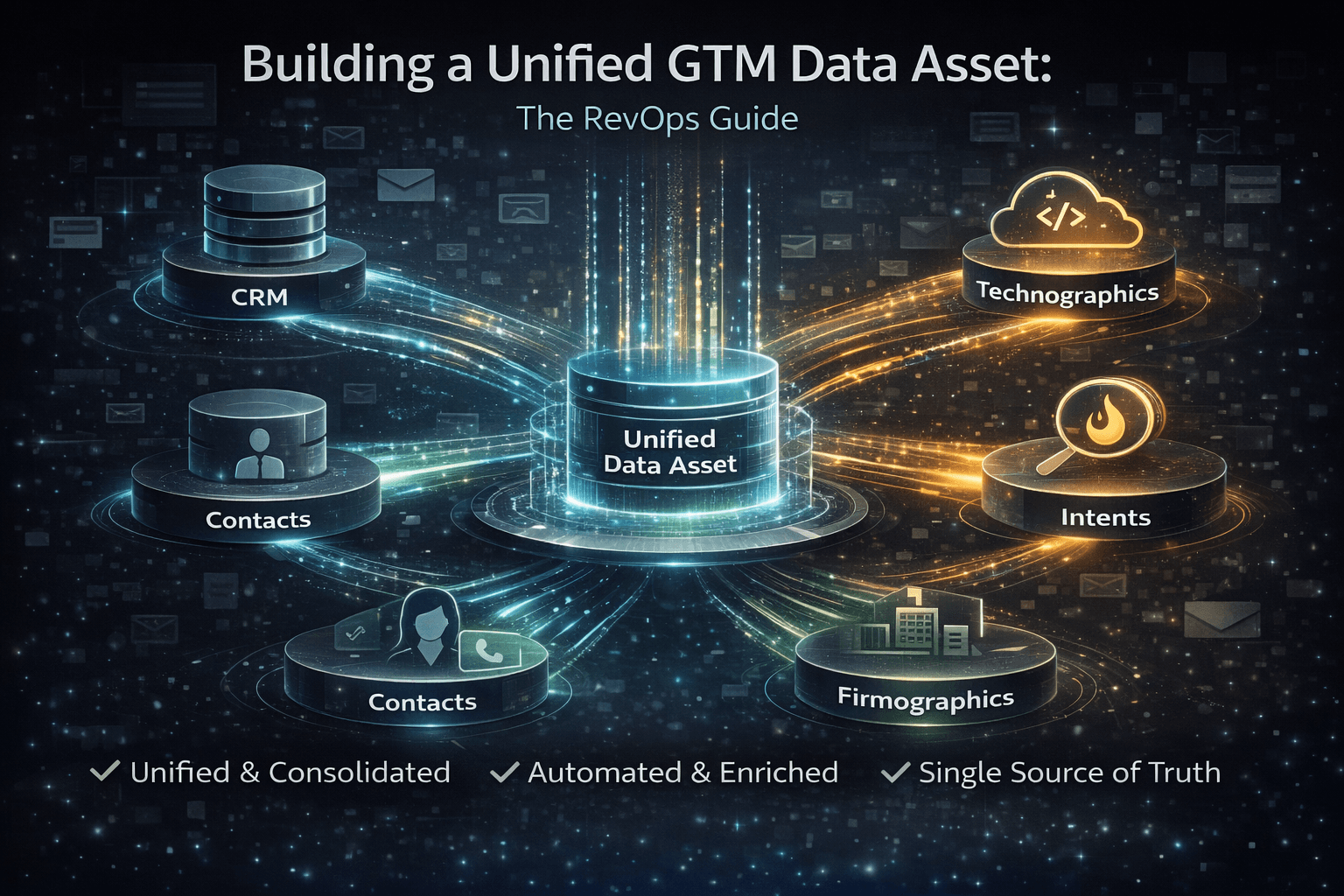
Stop struggling with data silos. Learn how to create a unified data asset by merging databases and automating your enrichment stack for better GTM.
January 20th, 2026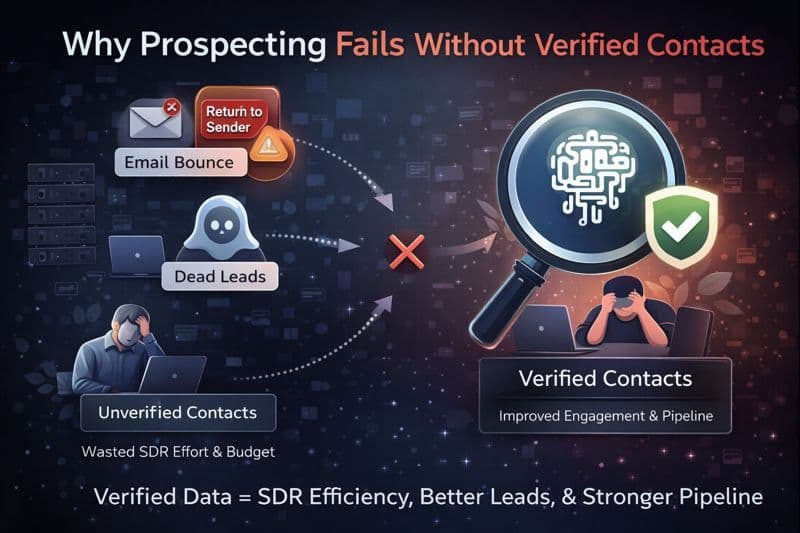
Stop wasting resources on dead leads. Discover how verified contacts improve SDR efficiency, outbound performance, and lead quality for B2B GTM teams.
January 20th, 2026