
Lead Enrichment Tools in 2025, Comparing the Top Platforms and Metrics That Matter
Build a reliable pipeline with real-time enrichment, validated data, and actionable buyer intent signals.
 October 2nd, 2025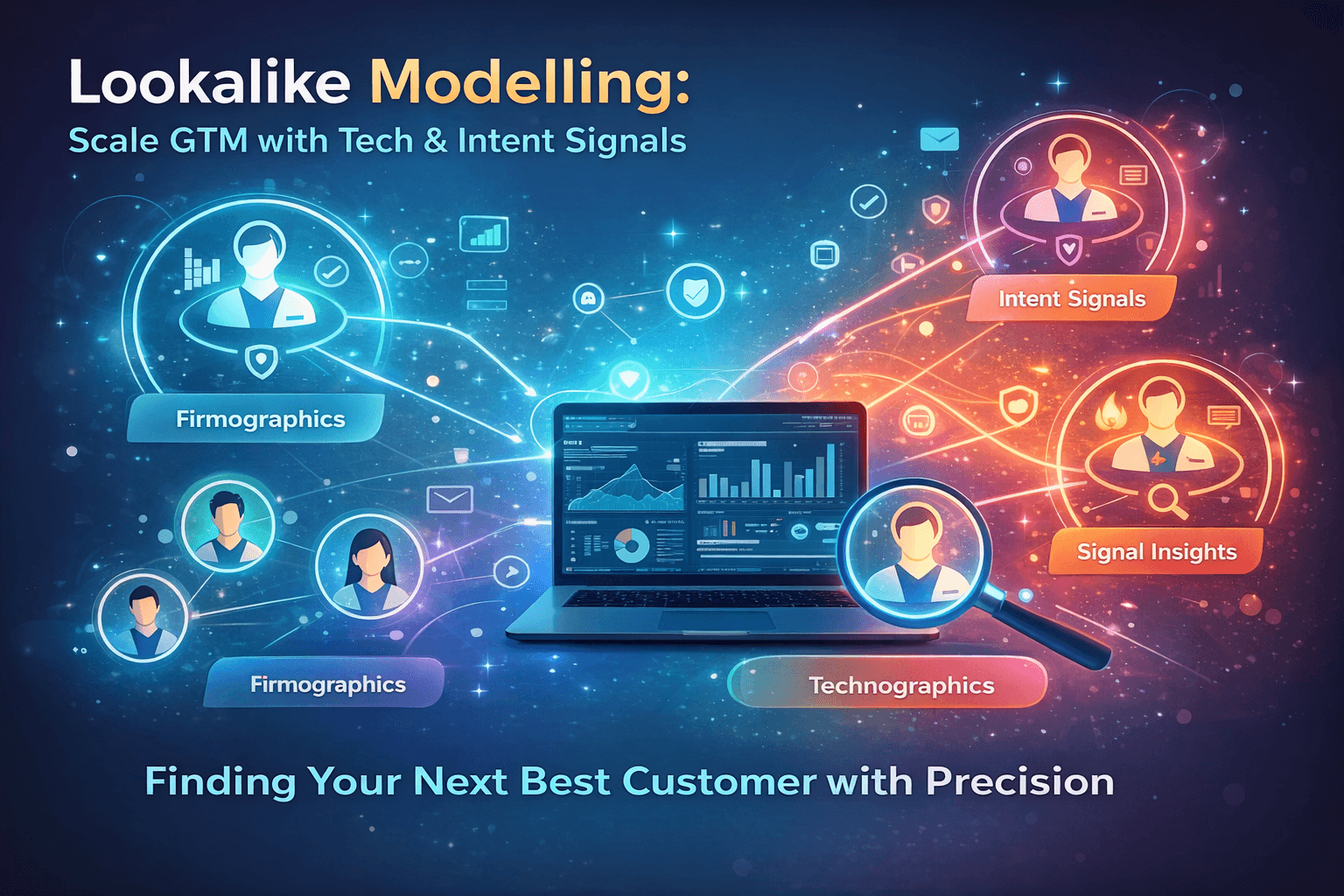
Learn how B2B lookalike modelling uses technographics and signal insights to uncover your next best customers and scale ICP targeting.
Every Demand Generation and GTM leader knows the feeling: You have a list of "perfect" accounts. They match your Ideal Customer Profile (ICP) on paper - right industry, right revenue, right headcount. Yet, when your SDRs reach out, they hit a wall. When marketing runs ads, the CTR is abysmal.
Why? Because demographics alone are no longer enough.
In a saturated SaaS market, relying solely on firmographics (who they are) is a recipe for wasted budget. The most sophisticated Revenue Operations (RevOps) teams are pivoting to a deeper, more scientific approach: Lookalike Modelling enriched with Technographics and Intent Signals.
This isn't just about finding more companies; it’s about finding companies that act and operate exactly like your highest-value customers. Here is how you can leverage dynamic data to revolutionise your account expansion strategy.
For years, "lookalike audiences" were the domain of B2C marketers (think Facebook Ads targeting). In B2B, we attempted to replicate this by buying static lists based on NAICS codes and revenue brackets.
The problem with this traditional approach is twofold:
Traditional list building treats Company A and Company B the same. Lookalike modelling treats them differently based on signal insights, not just surface-level labels.
The modern solution lies in moving from static lists to dynamic, AI-verified data.
Advanced lookalike modelling uses Artificial Intelligence to analyze the "DNA" of your best customers. It goes beyond the obvious to identify hidden patterns - or "data signals" - that correlate with a closed-won deal.
Instead of asking, "Who is in the Logistics industry?", AI asks:
By layering these signals, AI can generate a list of net-new accounts that mathematically resemble your best customers, drastically increasing the probability of conversion. This is the core of Datakart’s approach: using real-time, verified data to ensure you aren't modelling your future growth on yesterday’s stale information.
Ready to build a high-conversion lookalike strategy? Follow this framework to move from "spray and pray" to surgical precision.
Don't just upload your whole customer list. Filter for your "Champions" - accounts with the highest Lifetime Value (LTV), shortest sales cycles, or highest Net Revenue Retention (NRR). You want to clone your best customers, not your difficult ones.
Identify the tech stack your Champions use. Do they all use Salesforce? Are they running on AWS or Azure? Do they use specific marketing automation tools?
This is the game-changer. Look for accounts that are currently showing purchase intent. This includes:
Equally important is defining who you don't want. This is often overlooked in ICP targeting.
Feed these parameters into your data intelligence platform. Start with a tight similarity threshold (top 1% match) for direct outbound, and a broader threshold (top 5% match) for brand awareness campaigns.
Don't just hand the list to sales. Orchestrate the play:
Let’s look at a hypothetical scenario to visualize the impact.
Company: SaaS-Secure, a cybersecurity compliance tool. The Challenge: They were targeting "Healthcare companies with 1,000+ employees." The TAM was huge, but response rates were under 0.5%.
The Shift: They applied signal insights to their modelling. They analyzed their top 50 customers and realized a pattern: their best buyers weren't just "Healthcare," they were:
The Result: By narrowing their list from 5,000 broad accounts to 400 high-signal lookalike accounts, SaaS-Secure improved their SDR connect rates by 20% and increased pipeline velocity by 3x. They stopped chasing the wrong 4,600 accounts and focused all energy on the 400 that were ready to buy.
Even with the best data, GTM teams can stumble. Avoid these common pitfalls:
To execute this at scale, you need a tech stack that communicates fluently.
Best Practice: According to Gartner, B2B buying groups are becoming more complex. Ensure your lookalike modelling identifies not just the Account, but the Buying Committee (Personas) within that account. Mapping the right contacts to the right lookalike accounts is the final mile of the race.
Lookalike modelling is no longer just a marketing tactic; it is a fundamental revenue strategy. By moving away from basic firmographics and embracing tech and intent signals, you can stop wasting time on cold leads and start focusing on accounts that are pre-disposed to buy.
The future of GTM isn't about having the biggest list - it's about having the smartest one.
Don't rely on stale data and guesswork. Discover your Total Addressable Market with precision. Book a personalized demo with Datakart and let us build your custom lookalike model today.
Retargeting focuses on people who have already visited your website or interacted with your brand. Lookalike modelling identifies new people or companies that haven't interacted with you yet but share characteristics with your existing best customers.
By analyzing the characteristics of divisions or subsidiaries where you have already won, lookalike modelling can identify "sister" companies or other divisions within a large enterprise that share the same pain points and tech stack, facilitating cross-selling.
Intent signals are data points that indicate a company is in an active buying cycle. This includes web search history, visiting competitor review sites (like G2 or Capterra), or surging consumption of content related to your specific solution category.
Build a reliable pipeline with real-time enrichment, validated data, and actionable buyer intent signals.
October 2nd, 2025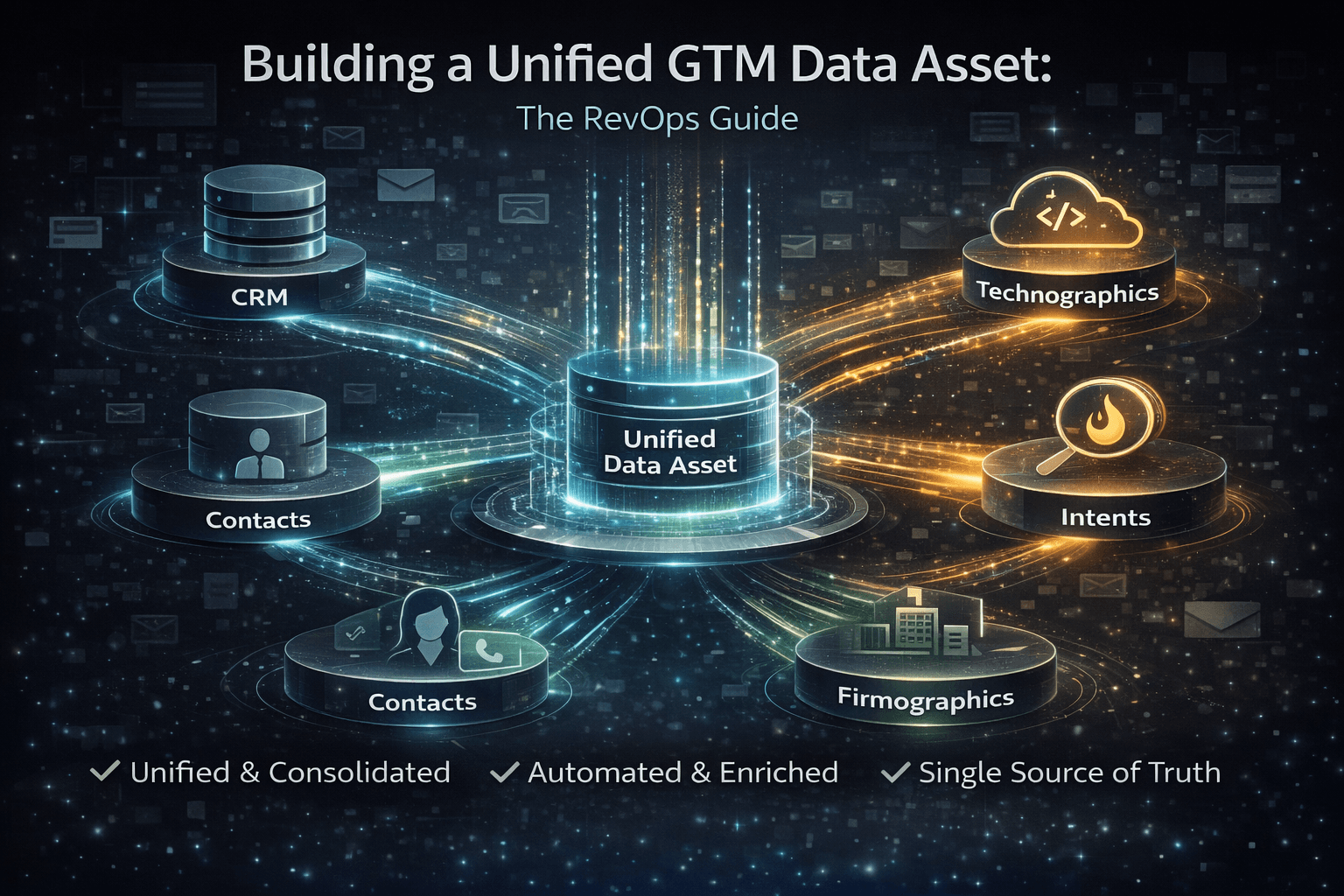
Stop struggling with data silos. Learn how to create a unified data asset by merging databases and automating your enrichment stack for better GTM.
January 20th, 2026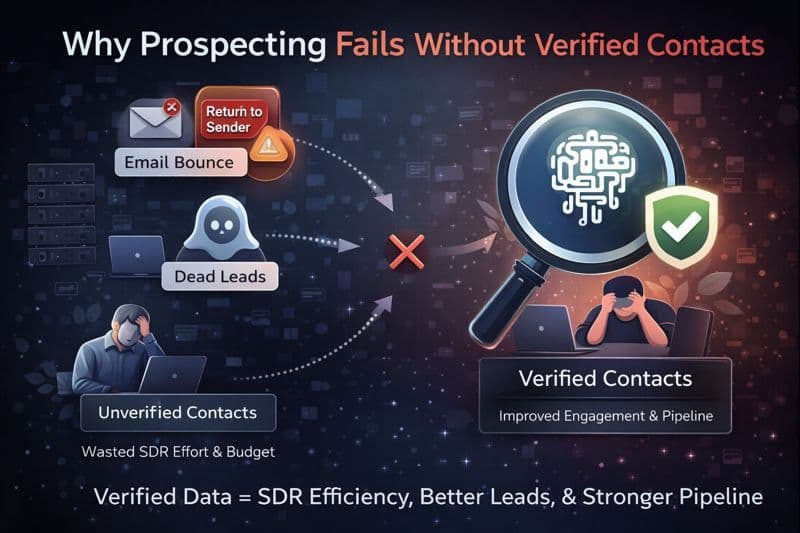
Stop wasting resources on dead leads. Discover how verified contacts improve SDR efficiency, outbound performance, and lead quality for B2B GTM teams.
January 20th, 2026