
Lead Enrichment Tools in 2025, Comparing the Top Platforms and Metrics That Matter
Build a reliable pipeline with real-time enrichment, validated data, and actionable buyer intent signals.
 October 2nd, 2025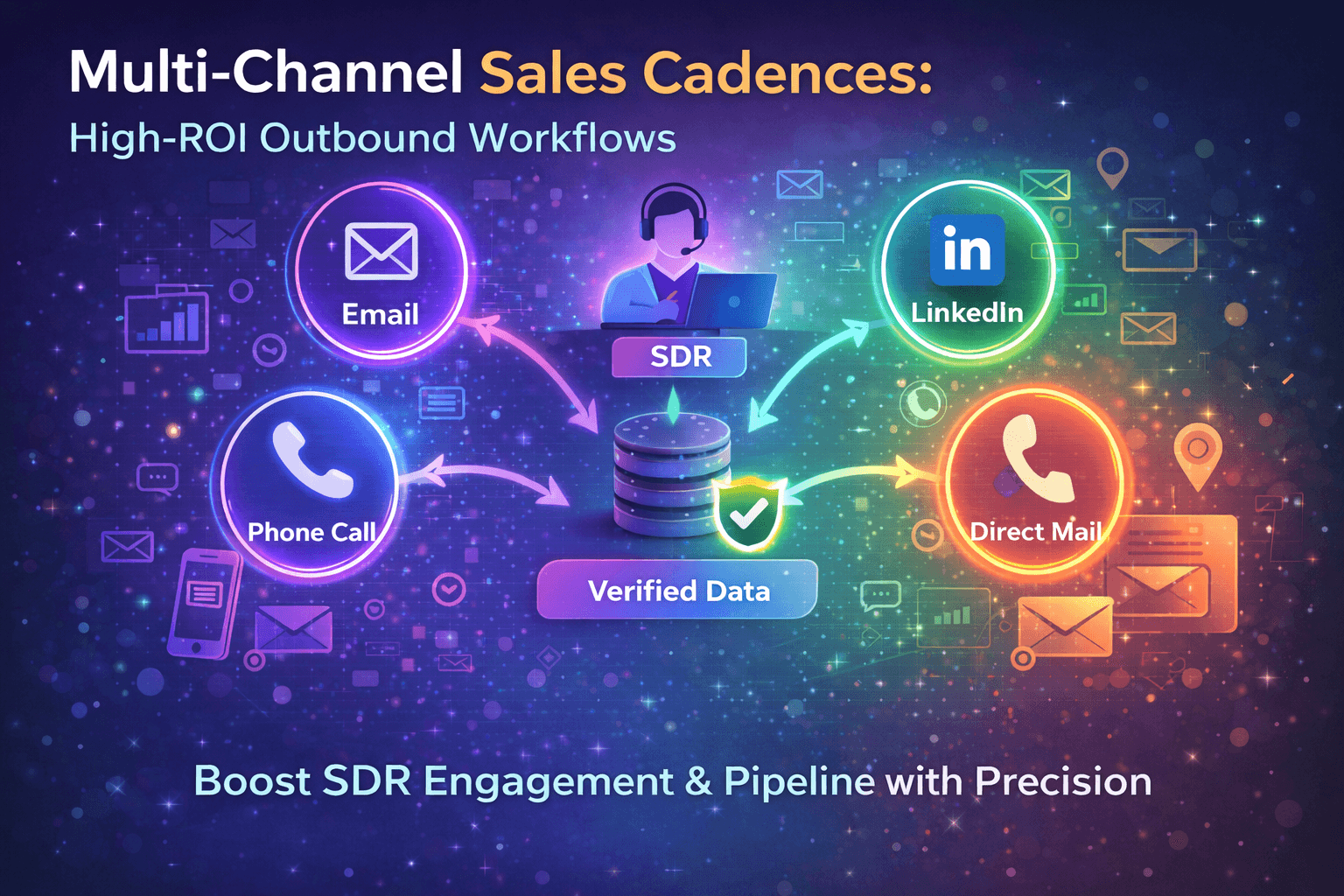
Scale your outbound workflows with precision. Learn how to build multi-channel sales cadences using verified data to boost SDR engagement and pipeline.
The B2B sales landscape has shifted from a volume game to a precision game. If you are a Demand Gen Head or a GTM leader, you’ve likely noticed a frustrating trend: your SDRs are doing more "work"- sending more emails and making more calls - yet meeting bookings are plateauing or, worse, declining.
The noise in the average B2B buyer’s inbox is deafening. According to research from HubSpot, the average professional receives over 100 emails a day, but only opens a fraction of them. To break through, your sales cadences cannot rely on a single channel or a "batch-and-blast" philosophy.
The modern engagement strategy requires a multi-channel approach - orchestrating touchpoints across email, LinkedIn, phone, and even direct mail. But there is a catch: a multi-channel strategy is only as effective as the data fueling it. Without verified, high-intent data, your team isn't scaling outreach; they are simply scaling noise.
Most outbound teams are still running on a "Quantity Over Quality" model inherited from the early 2010s. This traditional approach relies on static databases and manual list-building, which leads to three critical pain points:
In short, the "old way" is manual, noisy, and increasingly expensive as conversion rates drop.
The transition from a legacy sequence to a high-performance engagement strategy starts with the data layer. This is where AI-verified data becomes the competitive advantage for RevOps teams.
At Datakart.ai, we view data not as a static list, but as a dynamic signal. Verified data ensures that every touchpoint in your cadence is directed at a live, relevant contact. AI doesn't just verify that an email exists; it analyzes technographics, intent signals, and recent funding or hiring data to "green-light" a prospect for outreach.
By using an AI-driven approach, you solve the "Multi-Channel Friction" problem. When an SDR knows that a mobile number is 95% accurate and that the prospect just installed a competitor’s software, the confidence in the outreach triples. The cadence shifts from a series of guesses to a calculated outbound workflow where every step is backed by a reason.
To implement a modern outbound strategy, you need a framework that balances automation with personalization. Here are the six steps to building a cadence that actually converts.
Don't build one cadence for everyone. Segment your TAM (Total Addressable Market) into high-intent clusters. For example, create a specific sequence for "Companies using X technology with a recent VP-level hire." This allows for "templated personalization" that feels bespoke to the recipient.
The first 24 hours are critical. A high-performing SDR playbook starts with a multi-pronged approach:
Days 3 through 7 should move away from the "ask" and toward "value." Share a case study or a relevant industry insight. Use your data intelligence platform to identify which whitepapers or topics correlate with your prospect’s current tech stack.
Don't let your SDRs hide behind their keyboards. A multi-channel cadence should have a healthy mix of at least 4-5 calls over a 15-day period. Verified direct-dial data is the difference between an SDR spending 2 hours on "gatekeepers" vs. 2 hours on "conversations."
CTA: Want to see your TAM in action? Try Datakart’s Free Audit to see how much of your current list is actually reachable.
By Day 10, if there is no response, use a pattern interrupt. A 30-second personalized video (using tools like Vidyard or Loom) can humanize the brand. Reference the data signals you found earlier - e.g., "I noticed your team is growing its DevOps department, thought this might help..."
Every cadence must end. On Day 20-25, send a "break-up" email. It should be professional and leave the door open. If there's still no bite, move the contact from the "Outbound Workflow" back into a long-term "Marketing Nurture" track fueled by fresh data updates.
Consider a mid-market SaaS company that was struggling with a 2% "positive response" rate. Their SDRs were using a standard 12-touch email-heavy sequence. They were essentially "guessing" on direct dials and using a legacy database that hadn't been cleaned in six months.
The Transformation: The team implemented a multi-channel engagement strategy powered by Datakart’s verified data. They shifted to a 16-touch cadence over 22 days, incorporating LinkedIn Voice Notes and verified mobile dialing.
The Layers of Data Used:
The Result: Within 60 days, their dial-to-connect ratio improved by 40%, and their overall meeting-booked rate jumped from 2% to 18%. Because the data was verified, the SDRs spent less time on "administrative" tasks (fixing bad data) and more time on "revenue" tasks (selling).
Even with the best intentions, GTM teams often sabotage their own outbound workflows. Watch out for these:
To execute this at scale, your tech stack must be integrated. A disconnected stack creates "data silos" where the SDR doesn't know what the marketing team has already sent.
Best Practice: Regularly audit your cadence performance. If "Step 4 (Phone Call)" has a 0% success rate across the team, the problem might be the script, the timing, or the data quality. Constant iteration is the hallmark of a world-class GTM team.
A successful engagement strategy is no longer about who can send the most emails. It is about who can deliver the most relevant message, through the right channel, at the exact moment a prospect is ready to listen.
By anchoring your sales cadences in AI-verified data, you empower your SDRs to stop acting like telemarketers and start acting like consultants. Precision, multi-channel orchestration, and high-quality data are the three pillars of modern outbound success.
Stop guessing and start winning. Most GTM teams are working with data that is only 60% accurate. Don't let your SDRs waste another hour on a bad lead. Book a demo with Datakart today and see how our data intelligence platform can supercharge your pipeline.
While it varies by industry, most B2B research suggests between 12 and 16 touches over a 20-25 day period is the "sweet spot." This should include a mix of email, phone, LinkedIn, and social engagement to maximize the chance of a connection.
Deliverability starts with data quality. Use verified data to keep your bounce rate below 3%. Additionally, ensure your SDRs are customizing at least 20% of the email content to avoid being flagged by automated spam filters.
Relying on one channel creates a single point of failure. Some prospects live in their inbox, while others prefer LinkedIn or direct phone calls. A multi-channel engagement strategy ensures you meet the buyer where they are most comfortable, significantly increasing your overall response rates.
Look at your "Closed-Won" data from the last 12 months. What did those companies have in common right before they bought? Did they just get funding? Did they just implement a specific software? These are the "intent signals" you should use to trigger your cadences.
Build a reliable pipeline with real-time enrichment, validated data, and actionable buyer intent signals.
October 2nd, 2025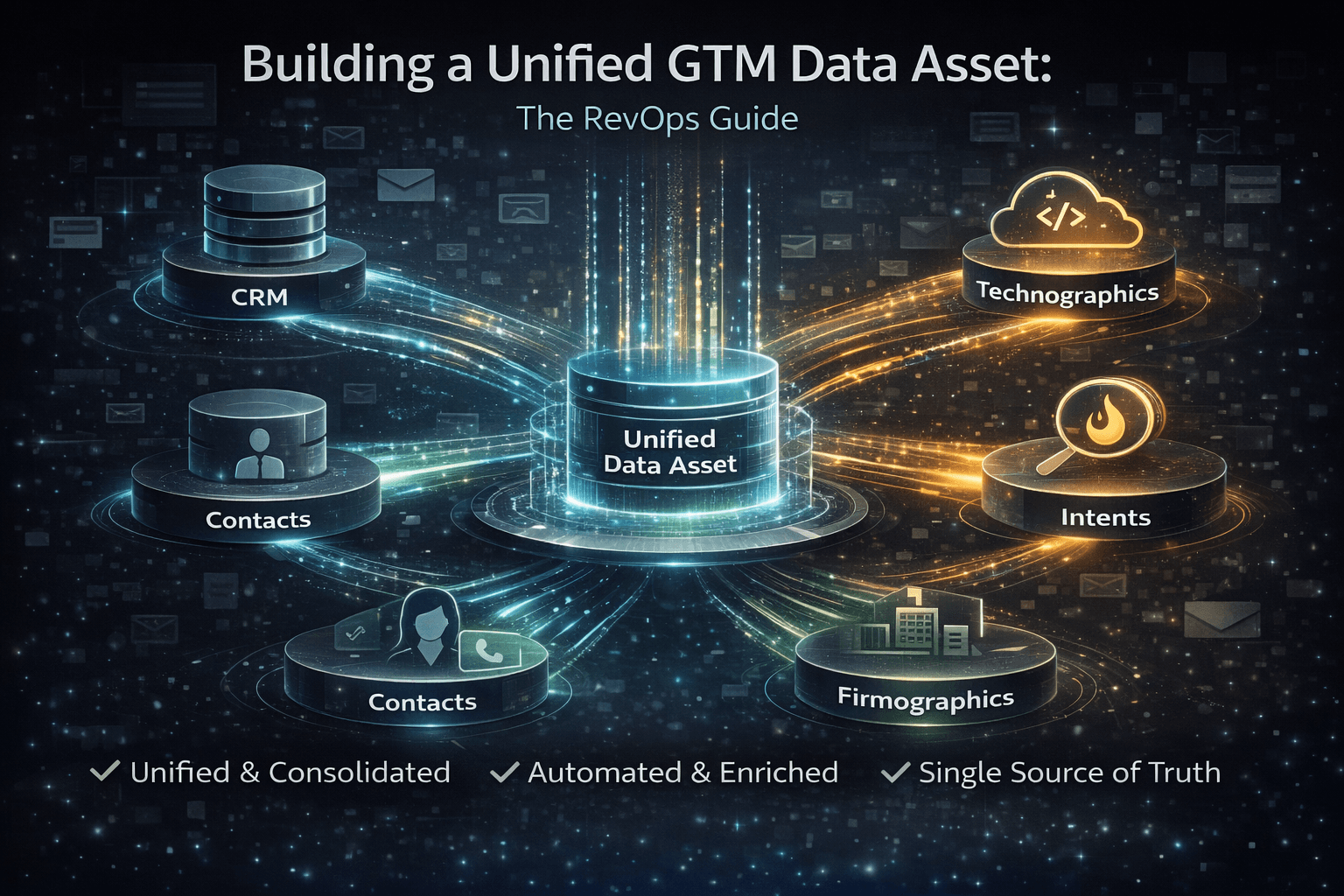
Stop struggling with data silos. Learn how to create a unified data asset by merging databases and automating your enrichment stack for better GTM.
January 20th, 2026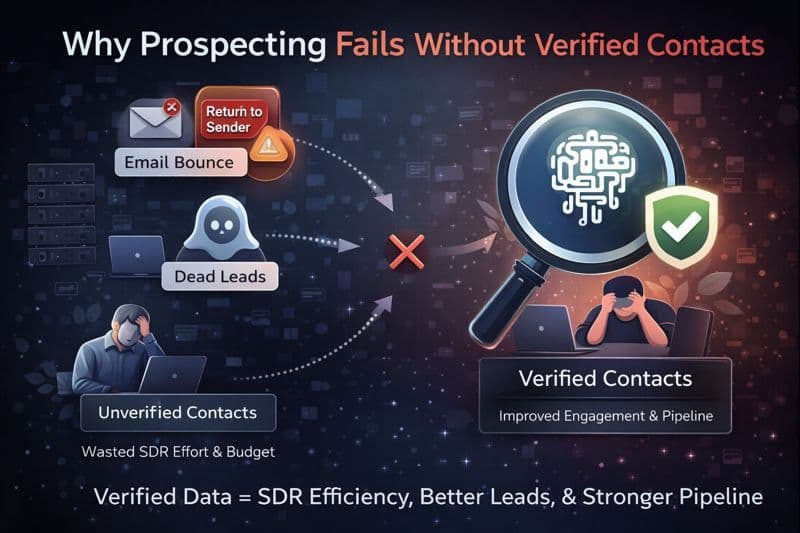
Stop wasting resources on dead leads. Discover how verified contacts improve SDR efficiency, outbound performance, and lead quality for B2B GTM teams.
January 20th, 2026