
Lead Enrichment Tools in 2025, Comparing the Top Platforms and Metrics That Matter
Build a reliable pipeline with real-time enrichment, validated data, and actionable buyer intent signals.
 October 2nd, 2025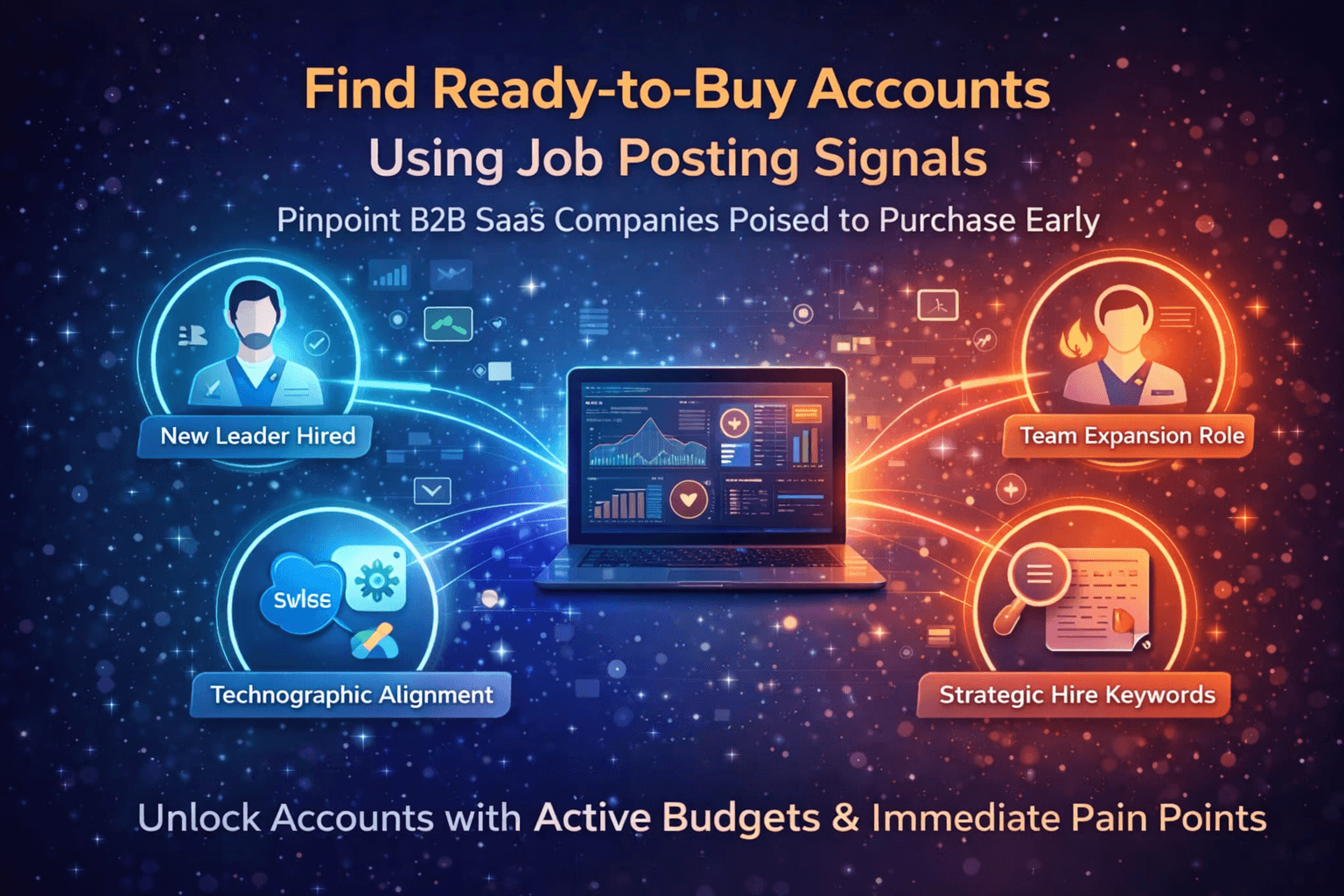
Unlock purchasing intent by tracking hiring trends. Learn how job posting signals identify team expansion and budget shifts to supercharge your B2B GTM.
In the high-stakes world of B2B SaaS, timing isn't just a factor - it is the only factor that truly moves the needle on pipeline velocity.
Demand Generation and GTM leaders spend millions of dollars trying to answer one question: Who is ready to buy right now? Traditionally, we’ve looked at firmographics (company size, revenue) or third-party intent (keyword searches). But there is a more visceral, highly predictive signal that most teams are either ignoring or failing to scale: Job posting signals.
When a company posts a job, they are publicly admitting they have a problem they are willing to pay a salary to solve. Whether it is a team expansion in a specific department or a search for a specialist in a new technology, a job description is essentially an "unspoken RFP." If you can decode these hiring trends, you can identify accounts with active budgets and immediate pain points long before they ever fill out a "Request a Demo" form.
For years, the standard "SDR Playbook" has relied on static lists. You identify companies in the "Cloud Security" space with 500 - 1,000 employees and start the sequence.
The problem? Firmographics only tell you who a company is, not what they are doing. This lead-scoring model is failing modern GTM teams for several reasons:
In a market where buyers are 70% of the way through their journey before talking to sales, relying on "who they were" six months ago is a recipe for missed quotas.
The shift from manual observation to AI-driven "Signal Intelligence" is what separates top-tier RevOps teams from the rest. Instead of seeing a job posting as a recruitment task, AI views it as a purchasing intent data point.
Advanced data intelligence platforms like Datakart.ai ingest millions of job descriptions daily, but they don't just look for "titles." They use Natural Language Processing (NLP) to extract deeper layers of meaning:
By leveraging AI-verified signals, you move from "guessing" to "knowing." You aren't just calling a list; you are entering a conversation that the company has already started internally.
Implementing a signal-based GTM strategy requires more than just a data feed; it requires a structural workflow. Here is how to operationalise job posting signals.
Define which hires at your target accounts act as a precursor to needing your software.
Don't just look at the title. Mine the "Requirements" and "Responsibilities" sections. If they mention "managing a $1M+ ad spend" or "migrating legacy data to the cloud," you have identified a specific project and budget.
The person hiring for the role is your primary stakeholder. If a VP of Engineering is hiring three DevOps engineers, the VP is the person you need to reach out to. Your message should be: "I saw you're expanding your DevOps team; we help teams like yours scale infrastructure 2x faster."
AI can help distinguish between a company replacing a departed employee and a company creating a net-new department. Net-new departments represent team expansion and are 3x more likely to have a budget for new tools.
The most powerful signal is a "Hiring Signal + Tech Signal" combo. For example: Account is hiring a Head of RevOps (Hiring Signal) and they just installed Snowflake (Technographic).
Don't let this data sit in a dashboard. Feed these signals directly into your CRM or Slack. When a "Tier A" account posts a "Trigger Role," the account owner should be notified within hours.
Let's look at a hypothetical (yet common) scenario involving a B2B SaaS company specialising in Sales Productivity software.
The Challenge: Their SDR team was struggling with a 3% "Meeting Booked" rate using traditional firmographic targeting. They were calling VPs of Sales at large enterprises, but the message was generic.
The Shift: They began using job posting signals to filter their TAM. They specifically looked for accounts that:
The Result: By tailoring their outbound sequences to reference these specific hiring goals, the team saw a 20% increase in connect rates and a 2x increase in pipeline generated within 60 days. The prospects felt the sales team "understood their current internal struggles," which broke the ice immediately.
Even with high-quality signals, your strategy can fail if execution is poor. Avoid these pitfalls:
To make job posting signals work, they must be integrated into your existing RevOps stack. According to HubSpot, "Data decentralisation" is the #1 killer of GTM efficiency.
Best Practice: Create a "Signal-to-Action" matrix.
The most effective sales teams don't just work harder; they work smarter by listening to what the market is telling them. Job postings are not just a tool for HR - they are a direct line into the strategy, budget, and pain points of your future customers.
By shifting your focus toward job posting signals and hiring trends, you move from a "push" marketing strategy to a "pull" strategy. You are no longer interrupting a prospect's day; you are offering a solution to a problem they have already publicly identified.
Stop chasing accounts that aren't ready to buy. Let the data show you where the growth is happening in real-time. Book a personalized demo with Datakart today and see how we can turn hiring signals into your most profitable sales channel.
Job posting signals are data points extracted from a company’s recruitment activity. By analyzing what roles a company is hiring for and the skills required in the descriptions, GTM teams can infer purchasing intent, budget availability, and internal strategic shifts.
A new hire - especially in leadership or specialised technical roles - represents a business investment. Every hire requires tools, software, and infrastructure. If a company is expanding a team, they almost certainly have a budget allocated for that department's success.
By looking at hiring trends across your industry, you can identify "pockets of growth." For example, if you see that "Mid-market Fintechs" are suddenly hiring 40% more Compliance Officers, that entire segment becomes a high-priority target for your compliance software.
"Better" depends on your goal, but job posting data is generally more "actionable." While standard intent (keyword searches) tells you what someone is thinking about, hiring data tells you what a company is committed to doing and where they are putting their capital.
Build a reliable pipeline with real-time enrichment, validated data, and actionable buyer intent signals.
October 2nd, 2025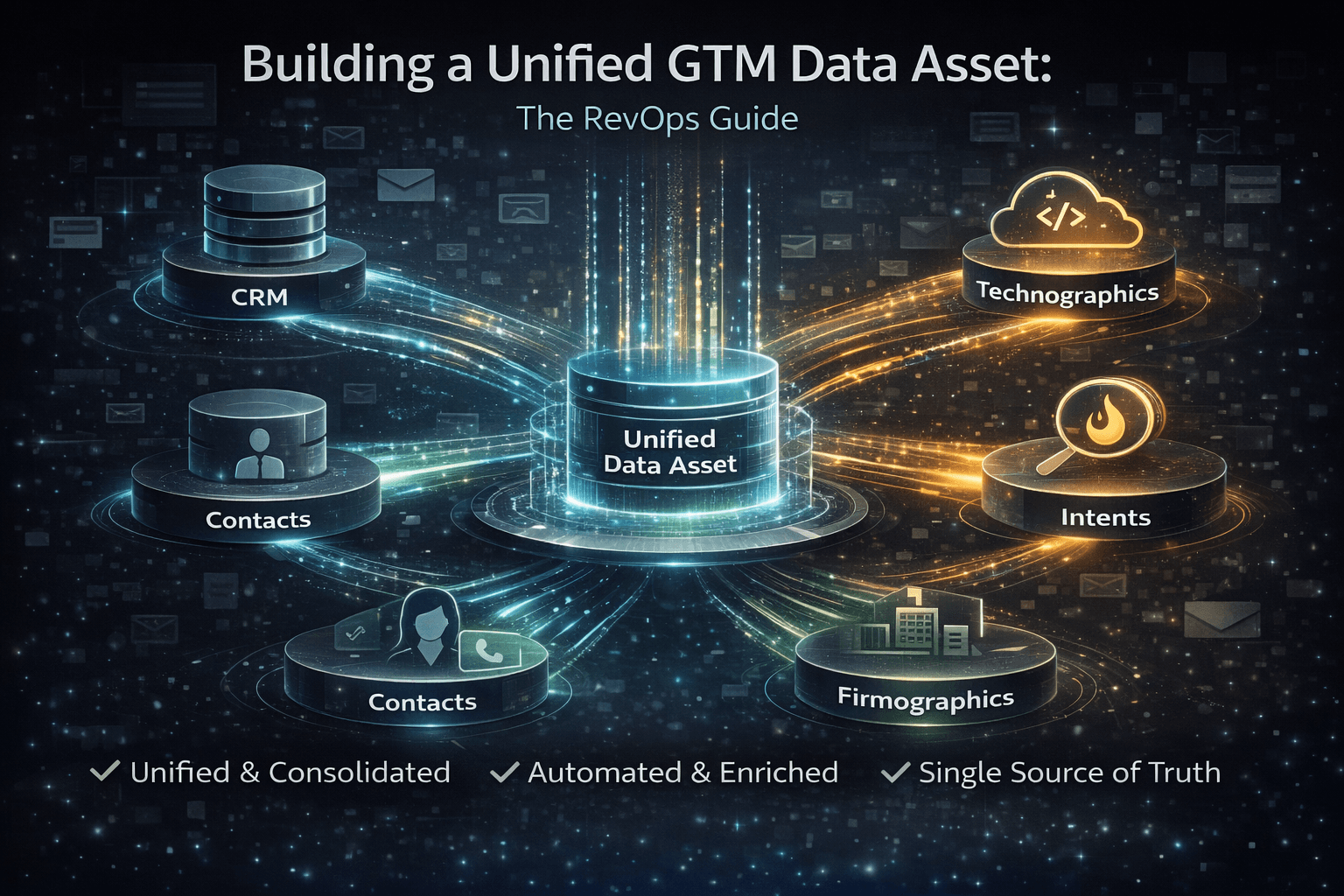
Stop struggling with data silos. Learn how to create a unified data asset by merging databases and automating your enrichment stack for better GTM.
January 20th, 2026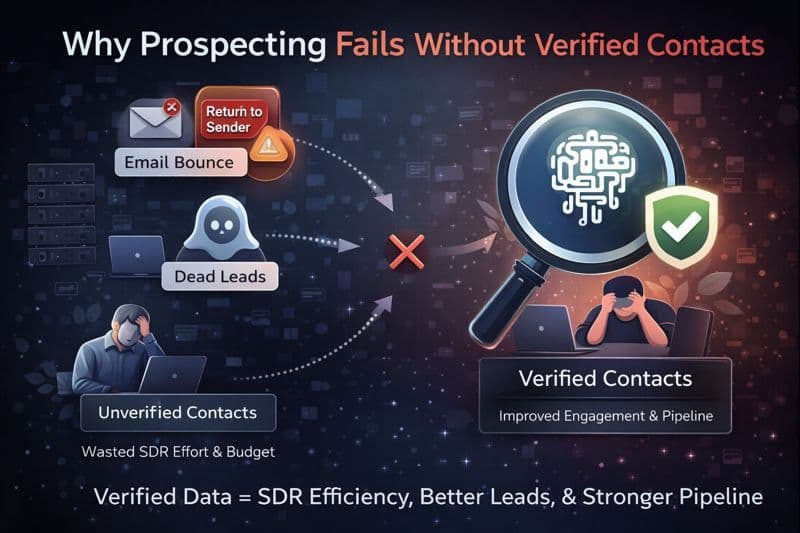
Stop wasting resources on dead leads. Discover how verified contacts improve SDR efficiency, outbound performance, and lead quality for B2B GTM teams.
January 20th, 2026